The Return
It’s been a while since I wrote a blog – three years in fact. The effects of Covid lockdown meant classes were paused and many yoga teachers moved online. I was a bit slow to the online forum and struggled with the technology, though I am slowly catching up! I took a break from writing following a family bereavement and when classes started up again, I started a quarterly newsletter instead to communicate with customers.
So here we all are, three years on from when Covid first emerged, and although the way we teach yoga has perhaps changed in some respects, the natural world is still here, and it is our connection to nature which I believe has sustained us and supported our mental and physical health through the pandemic. A long-standing member of the National Trust, I also joined the RSPB and the Wildlife Trusts during lockdown, which have all been a great source of social regulation – meeting like-minded people who love the natural world and want to support local environmental and conservation projects.
Dru Yoga and Nature
If you have been to a Dru Yoga class you will be all too familiar with the different sequences linked to the elements and the natural world – the Earth sequence, Water Sequence, Inner Fire Sequence, Bhumi (earth) Flow etc. The Sun and the Moon sequences feature in many types of yoga traditions, as well as in Dru. Connecting with the elements and the natural world is not just a ‘theme’ to base a class around though, but an integral part of what yoga is. Here are some of the main areas in which we can integrate our yoga practice with our love of nature:
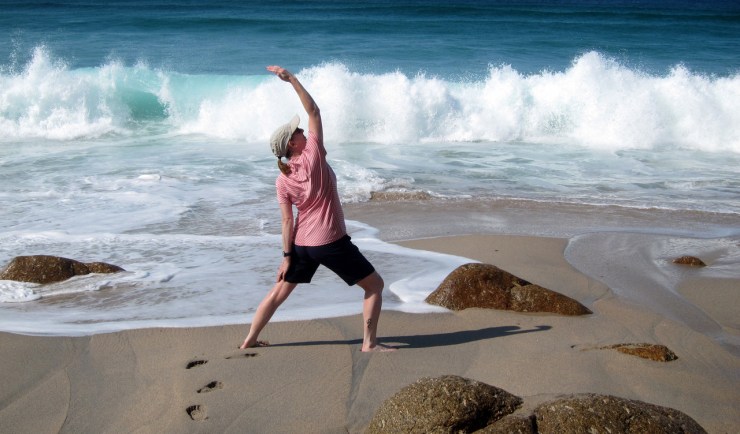
Enjoying the energising Reverse Warrior with the power of the sea!
Connection
The word ‘yoga’ means ‘union’ – the union of mind, body and spirit; the integration of the self with the universal energies. The goal of yoga posture practice is to enable us to sit and meditate comfortably, and the goal of meditation is to connect with the higher ‘self’ or universal energy. Yoga, and its sister science Ayurveda, is founded on the doshas – the three main energies that make up our constitution – the three doshas (pitta, vata, kapha) are comprised of combinations of the 5 elements (ether, air, fire, water and earth). Depending on the type of posture or sequences we do, we can influence the balance of the doshas and so improve our physical and mental health.
So by doing the ‘earth sequence’ in a Dru class, we can balance the earth element and help us with grounding and calming the mind, becoming aware of the lower back, and the connection between our breath and movement. We can use our ‘sun sequence’ practise to energise and fire up our solar centre, giving us a sense of vitality. By enabling our focus on the elements within us we can renew our appreciation for the natural world – we depend on nature for our very survival (light, water, food), and we realise we are intimately linked. You are Nature.
“All life on Earth is connected and related through the genetic code – we are connected to every single thing that has ever lived as well as all life today.”
— Professor Brian Cox, Wonders of the Universe
Finding your ‘Flow state’
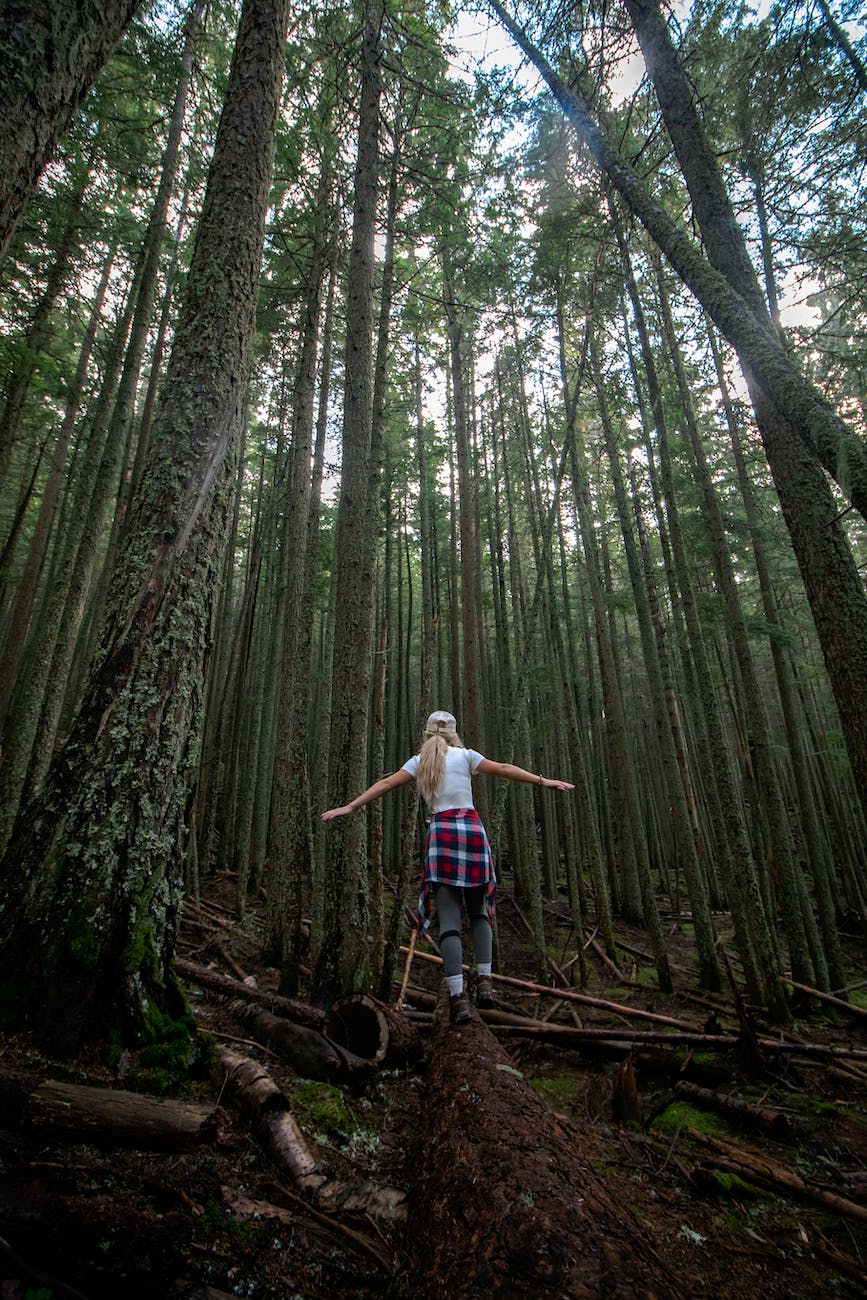
The mental wellbeing benefits of yoga has been well-researched and presented, and one of the ways Dru Yoga can enhance this is to provide an environment for being ‘in the here and now’. When we get out of our mind and into our body, through yoga postures, sequences or breathing techniques, we don’t worry about the future or the past, and stay in the ‘present’ moment. It may be that you achieve this still point (or Dru point as we call it) when out in nature – forest bathing (Shinrin-yoku), gardening, doing photography or painting outdoors. In Dru we often recommend doing your yoga outdoors, for an enhanced experience and a real connection with nature – listening to the sound of the birds, experiencing a ‘forest bath’, paddling in a bubbling stream, feeling the soft grass beneath your feet or the warm sun as you do your Sun Salutations.
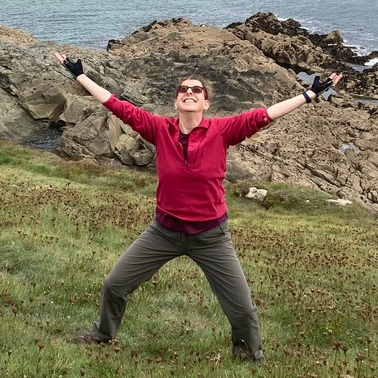
Doing the Salute to the Four Directions in Cornwall
Yoga and spirituality
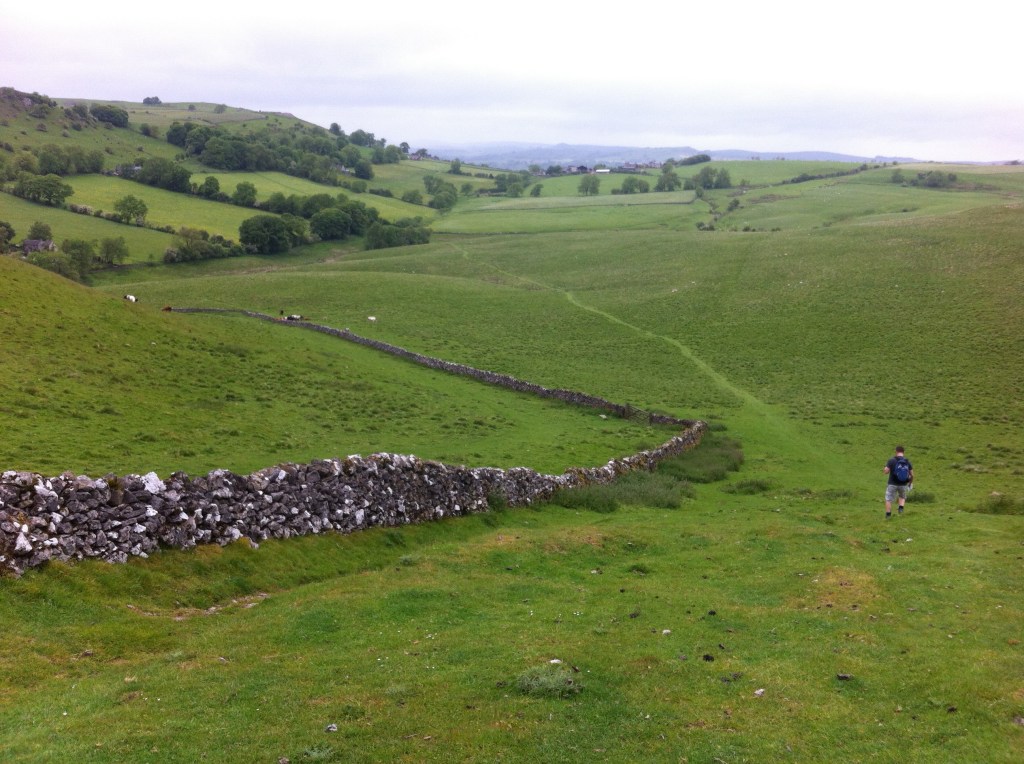
“It is very good for the soul, to see the other half of the country. Cities are only half of the picture and a lot of people from cities think that the countryside is foreign to them. This just simply isn’t true. It’s foreign to you in a physical sense in as much as you don’t go there often enough, but when you actually go you feel it having an effect on you, an effect deep within you. And if indeed we have a soul, that’s what the countryside is getting in touch with”
Billy Connolly, World Tour of Scotland
Whether you are a religious person or not, I believe there is certain sense of belonging and connection to something ‘greater’ than ourselves when we connect with the natural world. In fact, my husband often regards his walking in nature as his ‘yoga’, the activity that is most likely to put him into that ‘flow’ state described above. Have you ever stood atop a mountain after an exhilarating climb and felt a sense of euphoria and connection to the universe? Maybe practising a meditative walk or yoga sequence outdoors provides a similar feeling? Many religions include meditative walking around a ‘labyrinth’ – an elaborate spiral-shaped path – to enhance the spiritual effect of the natural world. Listening to birdsong or the sound of the ocean whilst doing yoga practice works for some. We use spirals and circles a lot in Dru Yoga, mirroring shapes occurring in nature, and we use animal poses (dog, cat, camel, tiger, eagle, crocdile etc) or poses such as Mountain or Tree, to reflect our connection with all life. These practices can be done for the mental and physical benefits and also experienced on a spiritual level, depending on your intention.
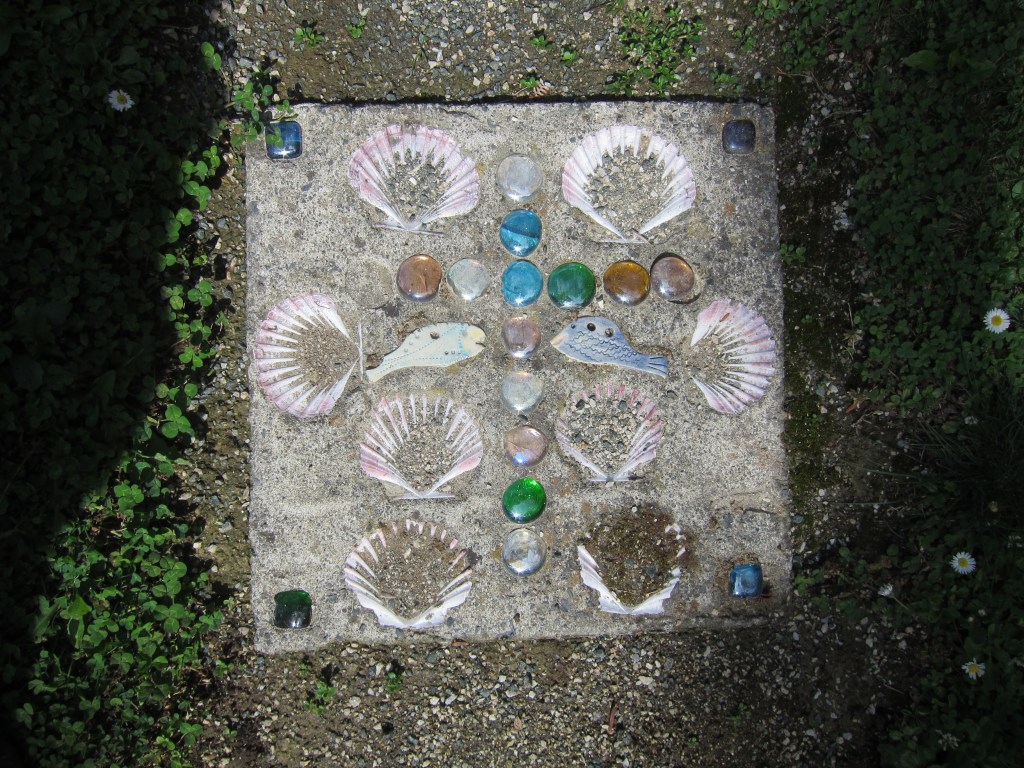
Image from a walking labyrinth in a churchyard, Motueka, New Zealand, showing Christian symbols of the cross, fish and scallop shells.
Mental wellbeing and social regulation
In my Mental Wellbeing blog I talk about the importance of connecting with other people to regulate the vagus nerve – an important part of building emotional resilience and reducing the effects of stress. Through joining a yoga class we are able to connect with like-minded people and create an opportunity to share a positive experience in a non-judgmental environment. Yoga is not a competition, so we begin to accept our bodies as they are, and learn how to be kind to ourselves through compassionate practice. Human beings are naturally social animals – we are not meant to live in isolation from others – and a yoga can help us to explore this and other aspects of our ‘true nature’.

Sharing stories and songs on a Dru retreat in Snowdonia.
A call to action
Listening to a podcast about the Apollo missions recently I was reminded of the beautiful photograph taken by Jim Lovell and Bill Anders in 1968 which came to be known as ‘Earth Rise’. This picture of our beautiful blue planet, suspended in the blackness of space, rising above the lunar surface, was a catalyst for the emerging environmental movement which spread around the world and led to the creation of the first ‘Earth Day’ in 1970 (now an annual event) celebrating environmental activism and awareness.
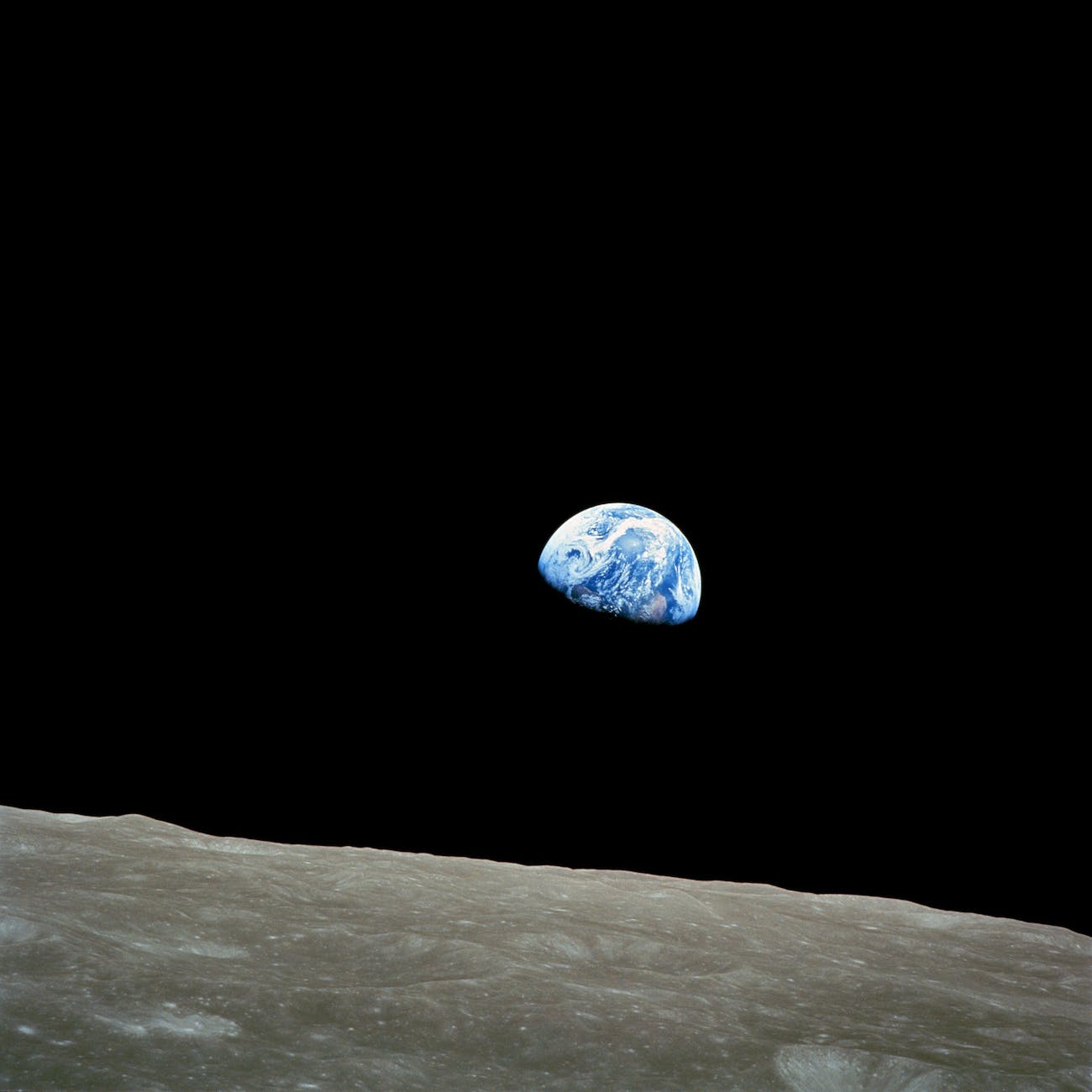
‘Earth Rise’: the first colour photo taken of Earth taken from space.
When the news of the criminal cutting down of the famous ‘Sycamore Gap’ tree reached me a few months ago, I was stunned that someone could commit such an act. Not just a famous tree on part of Hadrian’s Wall, but a place I had visited on walks with friends, in an area of the UK where I was born and raised to have respect for the environment and history. I think the reason it hit a lot of us so hard was because we felt connected to that tree, to the landscape. All life is rooted in the same soil, we breathe the same air, we are warmed by the same sun. Yoga reminds us of this. In tree pose we reach up tall, standing on firm foundations, in crocodile pose we surrender to the support of the Earth, in eagle we look down on our life with a new perspective and inner wisdom.

Me at Sycamore Gap, Hadrian’s Wall, in 1996 (wearing my Cardiff Conservation Volunteers tee shirt!)
In the philosophy of yoga we encounter a description of the qualities needed to live a peaceful and fulfilling life – the yamas and niyamas described by Patanjali in the Yoga Sutras. The yamas are like the brakes on a car – controls to restore balance to our minds and bodies. The niyamas are like the steering wheel and accelerator – giving us direction and energy. One of the yamas is ‘non-violence’ or ahimsa. When considering the environmental impact of our lives, what can we do to reduce our harm to the planet? Maybe buying palm oil-free peanut butter, or fairtrade coffee, volunteering for a local conservation project, subscribing to an environmental charity, switching from a petrol to an electric car, or planting wild flowers in your garden. Following the Sycamore Gap incident, I was inspired to donate to a national tree-planting charity, TreeSisters, https://www.treesisters.org/ and plant more in my garden. I chose to plant autumn bulbs which hopefully will give us snowdrops and irises next spring. Any action can all make a difference – however large or small. The point of ahimsa is to take action. What will inspire you to take action to be kinder to our precious planet?
An opportunity for gratitude
Also in the niyamas, we find santosha or ‘gratitude’ as one of the ‘directives’. Connecting with nature, and cultivating a child-like curiosity to be enthralled by the world around us, can help us appreciate the abundance in our lives. The benefits of spending time in nature have been well-documented and researched. Patients in hospital who have a window to look out at nature have shorter length of stays. Children who spend time outdoors have lower levels of obesity, better cognitive function, self-esteem and problem-solving abilities. Connecting with and appreciating the natural world can improve our resilience to stress and improve our mental and physical wellbeing. Gratitude needs to be practised though, it doesn’t just ‘happen’. So how about writing 3 things about the natural world every day you are grateful for? Try it for 20 days and see how you feel. You may be pleasantly surprised!

In every walk with nature, one receives far more than one seeks. – John Muir
Dru Yoga for Connecting with Nature
Want to deepen your yoga practice to harness the power and connection with the natural world? Try these free classes from my YouTube channel, designed to balance the elements and qualities of fire, earth, water and air within us. Each class is about an hour.
Selected suggested further reading:
- Last Child in the Woods Richard Louv
- John Muir: The Scotsman who Saved America’s Wild Places Mary Colwell
- Shinrin-Yoku The Art and Science of Forest-Bathing Dr Qing Li
- Points of Balance Chris Barrington and Dr Mansukh Patel
- Do Walk Libby DeLana
- Secrets of Ayurveda Gopi Warrier, Dr Harish Verma & Karen Sullivan
- The Yoga Sutras of Patanjali Sri Swami Satchidananda
- The 4 Pillar Plan Dr Rangan Chatterjee
- 13 Minutes to the Moon (podcast) BBC Sounds
 Kath's Dru Yoga